Last Updated on 24 February 2026
“Our brothers and sisters in Christ have suffered in silence for too long,” Rep. Moore said. “This joint report focuses on defending lives, upholding religious liberty, and stopping terrorists.”
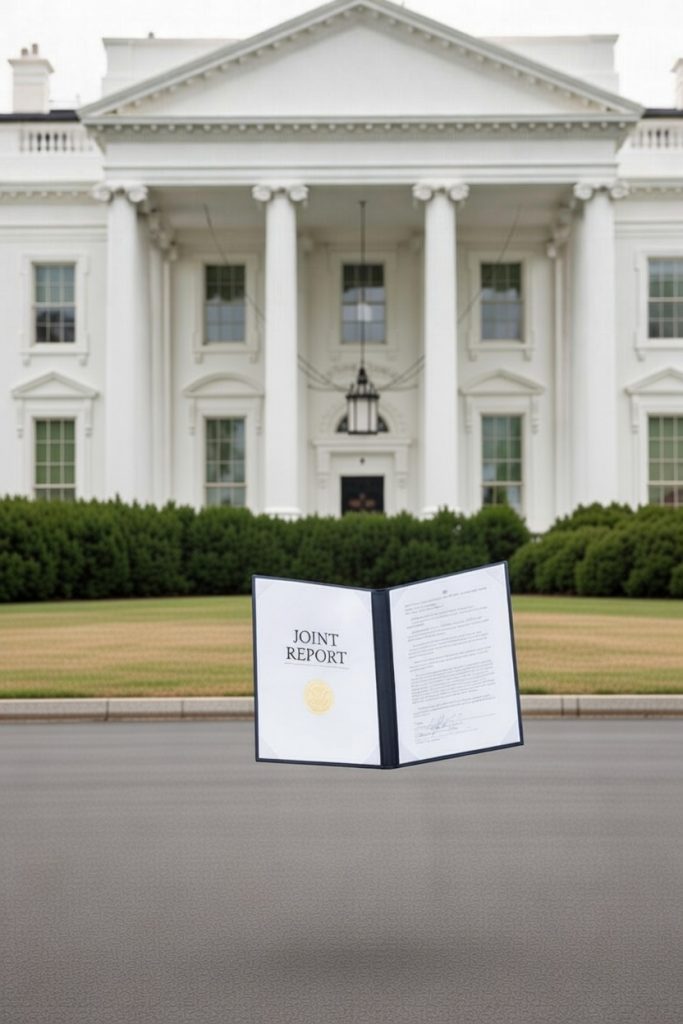
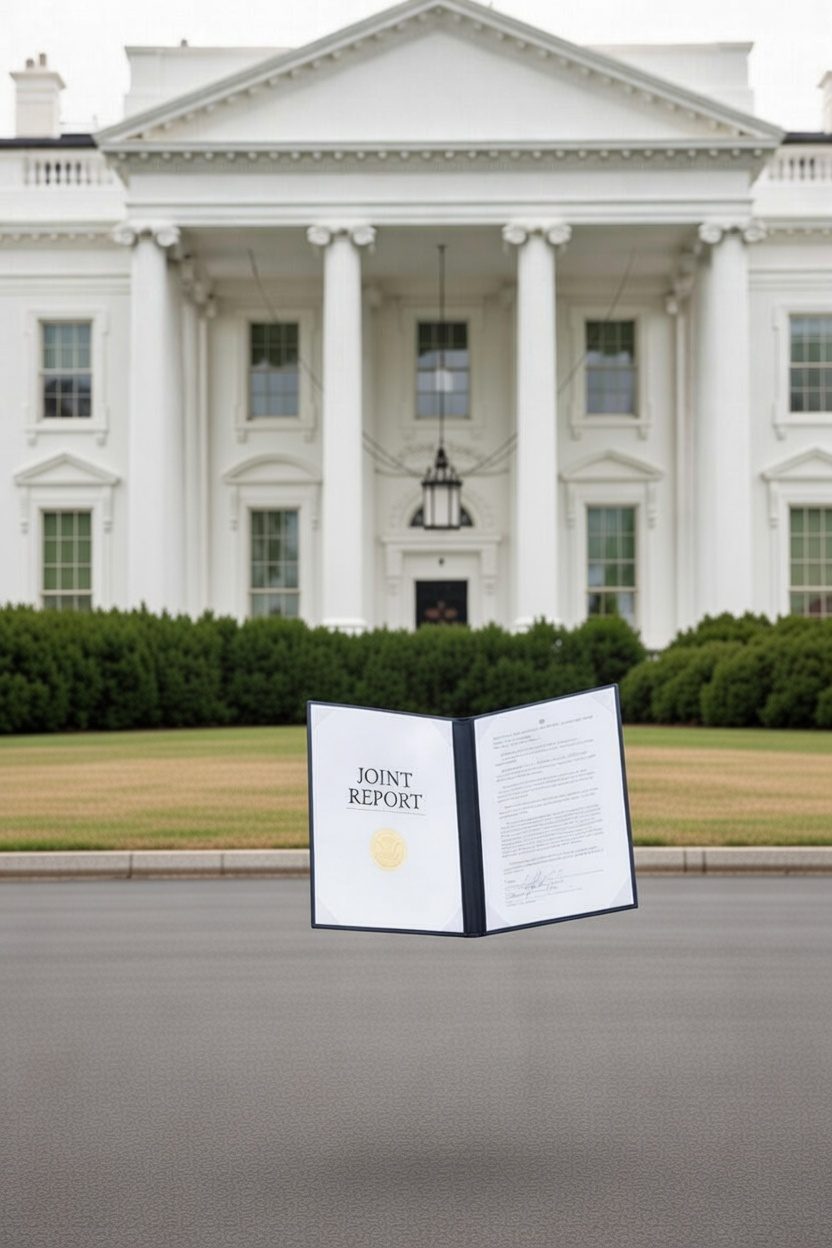
WASHINGTON, D.C. — In a move signalling a seismic shift in West African diplomacy, a bipartisan delegation of US lawmakers officially delivered a landmark joint report to the White House on 23 February 2026. The document urges immediate executive action against the Nigerian government for its failure to curb what lawmakers term a ‘systemic campaign of religious persecution’.
The delivery follows President Trump’s October 2025 redesignation of Nigeria as a Country of Particular Concern (CPC) and a series of escalatory US military and diplomatic manoeuvres aimed at protecting religious minorities in the region.
The Deliverers: A Bipartisan Coalition
The report was formally presented to the White House by senior members of the House Appropriations Committee and the House Foreign Affairs Committee. Key figures included:
- Riley M. Moore (R-WV): Vice Chair of the Appropriations Subcommittee on the Legislative Branch
- Tom Cole (R-OK): Chairman of the House Appropriations Committee
- Mario Díaz-Balart (R-FL): Chairman of the Appropriations Subcommittee on State and Foreign Operations
- Chris Smith (R-NJ): Chairman of the Foreign Affairs Subcommittee on Africa
The Report: A Blueprint for Accountability
The committees delivered the “Joint Report on the Persecution of Christians in Nigeria.” The document reflects a month-long investigation, including expert testimony and a congressional fact-finding mission to Nigeria’s Middle Belt.
“Our brothers and sisters in Christ have suffered in silence for too long,” Rep. Moore said. “This joint report focuses on defending lives, upholding religious liberty, and stopping terrorists.”
Recent US Developments: Designating “Terrorist Thugs”
The report arrives amid a rapidly tightening US policy toward Nigerian militant groups. Key developments include:
- Fulani Militias Targeted: The Nigeria Religious Freedom and Accountability Act of 2026 (H.R. 7457), introduced on 10 February, formally calls for the State Department to evaluate Fulani ethnic militias for designation as a Foreign Terrorist Organization (FTO). Lawmakers cite their involvement in massacres killing over 9,500 people between 2023 and 2025.
- Christmas Day Air Strikes: On 25 December 2025, President Trump ordered precision air strikes against ISIS-West Africa (ISWAP) targets in north-western Nigeria, citing the group’s “vicious killing” of innocent Christians.
- The Security Pact Mandate: The joint report demands a formal US–Nigeria security agreement that would allow deeper US intelligence and training, contingent on Abuja dismantling extremist networks and protecting Christian villages.
Economic and Security Fallout: A Nation at the Brink
The recommendations within the report threaten to destabilise Nigeria’s 2026 budget and fragile economic recovery:
1. Humanitarian and Health Pressure: The US provides over 26% of all bilateral aid to Nigeria. Analysts warn that a total freeze, as proposed in H.R. 7457, could jeopardise HIV/AIDS and malaria programs and push an estimated 700,000 additional Nigerians into extreme poverty by 2030.
2. Fiscal and Defence Risks: Facing a ₦23.85 trillion budget deficit, Nigeria’s ability to fund essential services could be limited. The threat to withhold $413 million in counter-insurgency funding through AFRICOM could paralyse operations against Boko Haram.
3. Judicial Reform or Sanctions: The report demands repeal of Sharia-based blasphemy laws in 12 northern states. Failure to reform could trigger the Global Magnitsky Act, freezing assets and restricting visas for officials deemed “complacent” toward religious violence.
Strategic Undercurrent: A Battle for Influence in Africa
While the report focuses on religious freedom, experts note a deeper geopolitical dimension. Nigeria, as Africa’s largest economy and most populous nation, is a critical security and energy partner. Analysts warn that aggressive US pressure could push Abuja closer to rivals like China or Russia, who have steadily expanded influence across the continent.
The joint report signals Washington’s willingness to link security cooperation, aid, and counterterrorism support to human rights benchmarks. Nigeria could become a precedent-setting case for how the US enforces CPC authority using sanctions, arms reviews, and counterterrorism leverage under the International Religious Freedom framework.
Abuja Hits Back: Sovereignty vs Interference
The Nigerian government has historically dismissed these claims, framing the violence as farmer-herder clashes driven by land scarcity. Following the report’s delivery, officials have reportedly prepared a formal protest, with President Bola Tinubu warning that US pressure risks destabilising broader regional counterterrorism efforts.
With US House leadership now firmly aligned behind the report’s findings, Abuja faces its most serious diplomatic and economic ultimatum in decades.